Celebrating the Triumph of Light Over Darkness
As the winter solstice approaches, millions of people around the world—particularly in Iran and neighboring regions—prepare for one of the most ancient and beloved festivals: Shabe Yalda (Yalda Night).
Occurring on the longest and darkest night of the year, Yalda is far more than just a date on the calendar. It is a poetic celebration of warmth, family, and the enduring hope that light will always conquer darkness.
The History and Meaning of Yalda
The word Yalda means “birth.” Historically, this night marks the birth of Mithra, the ancient Sun God. In Zoroastrian tradition, the winter solstice was seen as a critical turning point. While the night is at its longest, it also represents the moment the days begin to lengthen again.
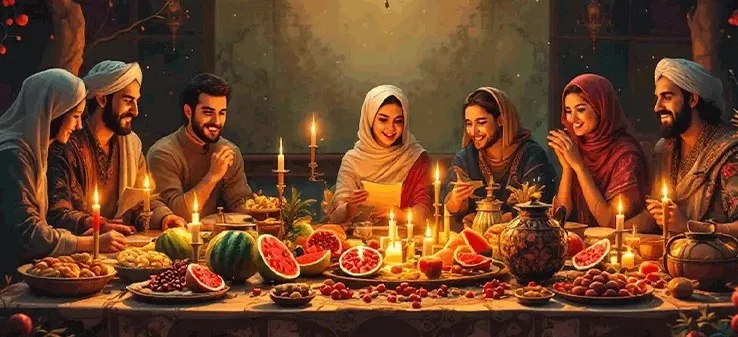
Families gather to stay awake together, protecting one another from the “darkness” and welcoming the sun’s return at dawn.
The Symbolic Table: Crimson and Gold
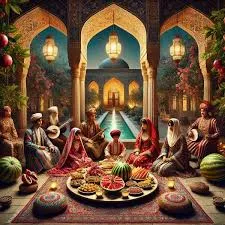
A Yalda gathering is centered around the shab-chereh (night snacking). If you walk into a home during Yalda, you’ll likely see a spread dominated by the color red, which symbolizes the glow of life and the dawn.
Pomegranates (Anar)
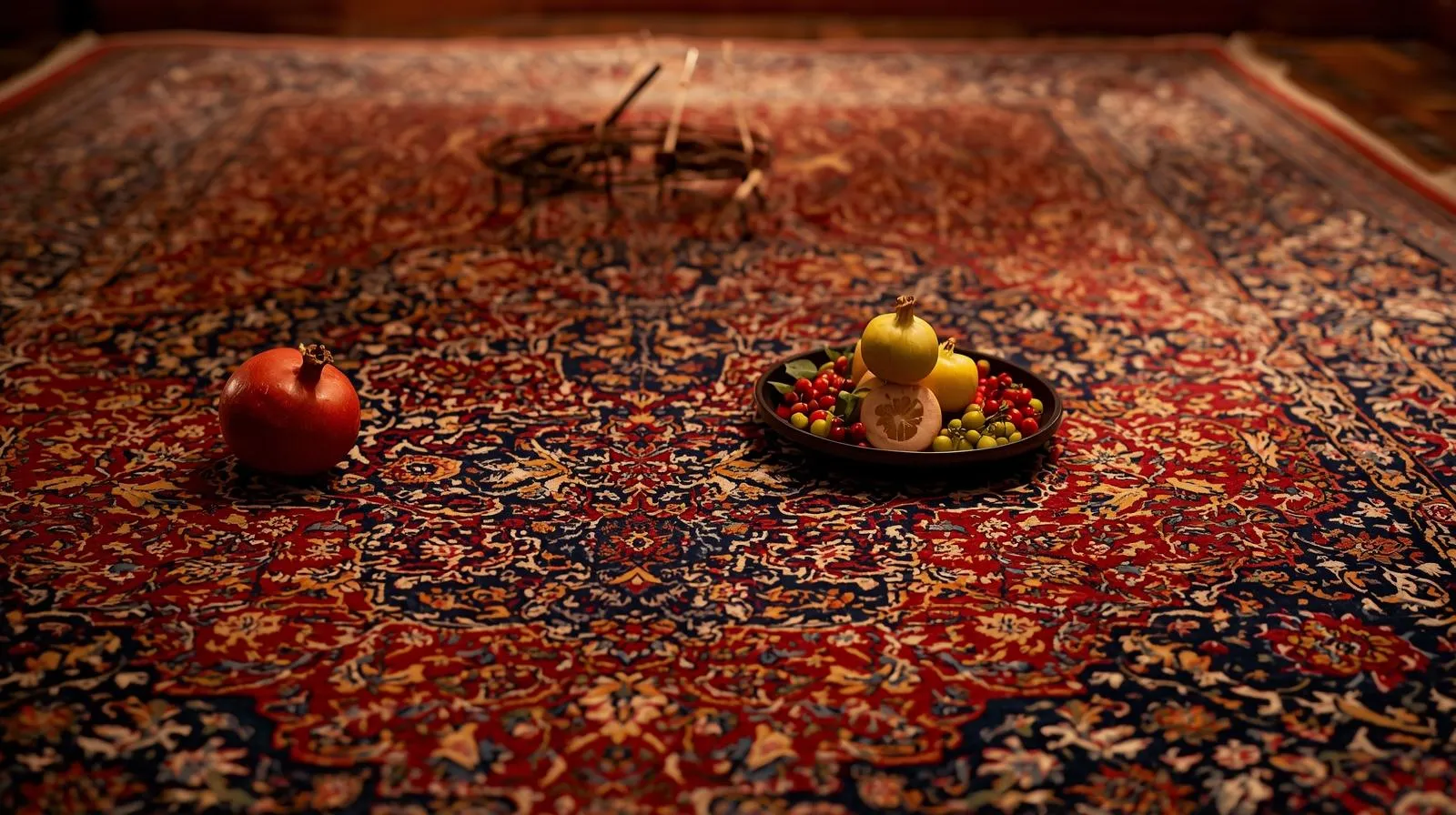
The “jewel of the table,” pomegranates represent fertility, light, and the cycle of life. Their deep red seeds are a reminder of the rising sun.
Watermelon (Hendevaneh)
Eating watermelon on the first night of winter is believed to protect the body from the heat of the coming summer and keep illnesses at bay.
Nuts and Dried Fruits (Ajil)
A special mixture of pistachios, walnuts, almonds, and dried figs provides the energy needed to stay awake and celebrate until the early hours.
The Tradition of Fal-e Hafez
Perhaps the most soulful part of the evening is the “Fal-e Hafez.” It is customary for the eldest member of the family to pick up the Divan (collected works) of the 14th-century poet Hafez.
Each guest makes a silent wish or asks a question about their future. The book is opened at random, and the poem on that page is read aloud. Because Hafez’s poetry is deeply mystical and metaphorical, the family then spends time interpreting the verses, finding guidance and hope for the year ahead.
Why We Celebrate Today
In a modern world that moves so fast, Shabe Yalda is a reminder to slow down. It’s a night to turn off the screens, gather around the Korsi (a traditional low table with a heater underneath), and share stories.
It teaches us a profound lesson: even in the deepest, longest “winter” of our lives, the dawn is inevitable.
Shabe Yalda Mobarak! May your pomegranates be sweet and your Hafez poems be full of good news.