Story of Kashan rug
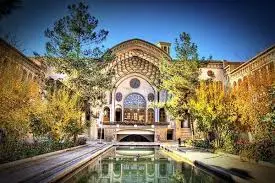
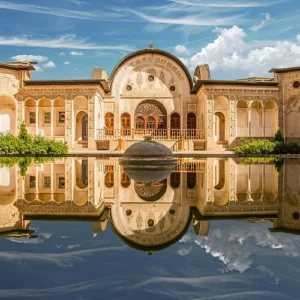
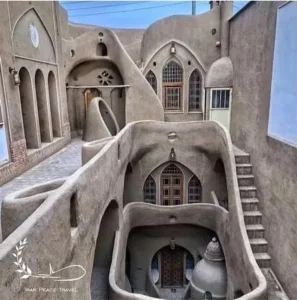
The story of the Kashan rug is a rich tapestry woven with threads of history, artistry, and the enduring cultural heritage of the ancient city of Kashan, Iran. Located near one of the earliest centers of civilization, the Sialk Hills, with a history dating back 7,000 years, Kashan has been a significant center for textile and carpet production for centuries.
Early Origins and the Safavid Dynasty
The art of weaving in Kashan likely dates back millennia, with archaeological discoveries hinting at early textile traditions. However, the first known mentions of Kashan rugs as the refined masterpieces we recognize today trace back to the Safavid Dynasty (16th-18th centuries). This era is considered the golden age of Persian weaving, and under the patronage of rulers like Shah Abbas I, Kashan rose to prominence as a major center for high-quality silk and wool rugs. Royal workshops in Kashan attracted the most skilled artisans, leading to the creation of pieces of exceptional beauty and craftsmanship, often adorned with gold and silver threads. These luxurious carpets were highly prized by royalty, both in Persia and in European courts, sometimes mistakenly referred to as “Polish carpets” due to significant commissions from Poland.
Distinctive Designs and Motifs
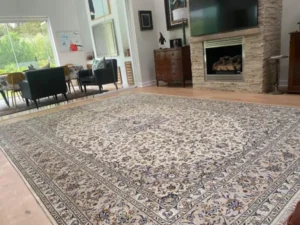
Kashan rugs are renowned for their intricate, curvilinear designs and motifs. These often feature:
Central Medallions: Typically tear-drop or oval-shaped, acting as a focal point.
Floral Patterns: Lush and detailed depictions of palmettes, leaves, blossoms (especially the Shah Abbasi flower and lotus), and arabesque vines.
Corner Spandrels (Lachak): Ornate designs that mirror or complement the central medallion.
Borders: Often multiple and intricate, featuring scrolling floral patterns and other decorative elements.
The “Tree of Life” motif: Symbolizing the connection between earth and heaven.
Unlike the geometric patterns found in tribal rugs, Kashan designs reflect their urban workshop origins, emphasizing symmetry and elegance. The color palettes typically involve rich and harmonious combinations of deep reds, blues, and ivory, with occasional accents of green, yellow, or burnt orange.
Materials and Weaving Techniques
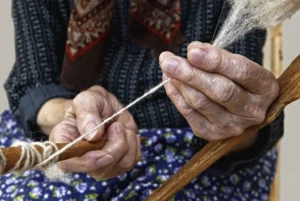
Kashan rugs are traditionally hand-knotted using the asymmetrical Persian (Senneh) knot on a foundation of cotton, although older and more luxurious pieces sometimes utilize silk for the foundation as well. The pile is usually made of high-quality wool, often “kork” wool from the neck of sheep, known for its softness and luster. Silk is also frequently incorporated into the pile to highlight details and add sheen.
The knot density in Kashan rugs is typically high, ranging from 120 to over 800 knots per square inch (KPSI), allowing for the creation of very detailed and refined patterns. The weaving process is labor-intensive, requiring skilled artisans and meticulous attention to detail.
Later Periods and Modern Kashan Rugs
While Kashan’s rug production experienced some decline due to economic and political changes in Iran, the city witnessed a revival in the late 19th and early 20th centuries. Master weavers like Hajji Mollah Hassan Mohtasham elevated the craft, and “Mohtasham Kashans” became highly collectible antiques, known for their exceptional weave and luminous wool.
Today, Kashan remains a significant center for producing high-quality hand-knotted Persian rugs. While traditional designs endure, modern Kashan rugs may also incorporate softer, more contemporary color palettes to appeal to a wider market. Machine-made Kashan-style rugs are also produced, but they lack the artistry and durability of their hand-knotted counterparts.
Cultural Significance
Kashan rugs are more than just floor coverings; they are works of art that reflect the rich cultural heritage and artistic traditions of Persia. Their intricate designs often draw inspiration from Persian poetry, mythology, and the natural world, weaving stories into their very fabric. These carpets are often considered family heirlooms, passed down through generations as symbols of wealth, status, and artistic appreciation.
The story of the Kashan rug is a testament to the enduring legacy of Persian craftsmanship, a tradition that continues to thrive in the modern era, captivating the hearts of collectors and enthusiasts worldwide.Foundation
The foundation of Kashan oriental rugs consists of cotton warps (top to bottom cords) and 2 shoots of cotton wefts (side to side cords), usually dyed blue. The first weft is thicker and straight and the second is thinner and sinuous.
Knot
Kashan oriental rugs use the Persian or Senneh asymmetrical knot. The yarn is placed in a loop around one of the warps (up and down foundation cords) and remains loose under the other. The 2 ends emerge on either side of the warp. The Kashan rugs will open to the left.
Pile
The pile is composed of tightly woven wool and is usually clipped relatively short to allow the intricacy of the design to show through. Although they would be quite rare today, some Kashans are made of silk.
Colors
The most common colors used in Kashan oriental rugs before 1970 were red and navy blue with the red used for the field and the navy blue for the major border.
From the 1970s until the 1980s, the color palette changed to a pale green/grey field with purple-blue wefts.
Since the 1980s, Kashan oriental rugs have gone back to the traditional colors of red and navy blue.